If you've ever stood in the supplement aisle wondering whether to grab a bottle of magnesium tablets or a spray bottle labelled "magnesium oil," you're not alone. Magnesium has become one of the most talked-about minerals for sleep, muscle recovery and everyday relaxation, and it now comes in more forms than ever. But tablets and sprays work in genuinely different ways, and knowing the difference can help you choose the option that actually fits your body and your routine.
This blog covers how magnesium tablets and magnesium sprays each work, the pros and cons of both, and a few practical tips for choosing between them. We'll also look at where topical magnesium fits into a broader wellness routine, so you can make the choice that suits you best.
Why Magnesium Matters
Magnesium is one of those minerals your body relies on constantly, often without you even realising it. It is the 4th most abundant mineral in our bodies. It plays a role in hundreds of bodily functions including mood, sleep, memory and muscle movement; basically, it helps keep your nervous system running smoothly.
Think of it like a volume dial for your brain and body. When things get too "switched on"; racing thoughts, restlessness, trouble winding down, magnesium is thought to help turn that dial back toward calm.
The tricky part is that a lot of us don't get quite enough of it. You might be more likely to be running low if you're a woman, you're older, you drink alcohol regularly, or your diet leans heavily on processed foods. Certain medications, like some used for reflux or fluid retention, can also affect your magnesium levels. Add it all up, and that's a huge number of people, which probably explains why magnesium has become such a hot topic in wellness circles lately.

Magnesium Tablets: How They Work
Oral magnesium supplements are the more traditional route, and they come in several different forms; citrate, glycinate, oxide, and others. What most people don't realise is that these forms aren't interchangeable: some are absorbed by the body far more efficiently than others.
Most absorbed oral forms:
-
Magnesium glycinate (bisglycinate): considered highly bioavailable and gentle on the stomach, making it a common choice for sleep, relaxation and daily magnesium top-ups.
-
Magnesium citrate: among the more bioavailable forms available, more easily absorbed in the digestive tract than many other types, though it's worth noting it can have a noticeable laxative effect at higher doses.
Least absorbed oral form:
-
Magnesium oxide: despite containing a high percentage of elemental magnesium on paper, oxide is poorly absorbed. With research measuring absorption at roughly 4%, compared to 28–33% for other common forms. It's why oxide is more commonly used for occasional constipation relief than as a daily supplement for topping up magnesium levels.
The takeaway: if you're choosing a magnesium tablet, the form on the label matters just as much as the dose; a "400mg" tablet of oxide and a "400mg" tablet of glycinate can deliver very different amounts of usable magnesium to your body.
A few other things to know about tablets:
-
Tablets are absorbed through the digestive tract, which some experts consider the most reliable pathway for raising magnesium levels.
-
The main downside for many people is digestive discomfort - bloating, an upset stomach, or the laxative effect that comes with certain forms.
If your digestive system tends to be sensitive, or you simply find it hard to remember a daily tablet, this is often where people start looking at topical alternatives.
Magnesium Spray: How It Works
Topical magnesium, usually magnesium chloride dissolved in water and applied directly to the skin - has become one of the most popular alternatives to tablets in recent years, and it's easy to see why. It skips the digestive system altogether, which is a big drawcard for anyone who finds oral supplements hard on the stomach.
It's also worth knowing that oral and topical magnesium don't use the same forms for the same reasons. Magnesium citrate and glycinate are favoured for tablets because of how well they're absorbed through digestion, but neither is designed for use on skin. Topical magnesium sprays almost universally use magnesium chloride, a form that's highly soluble in water, which is why it's become the standard choice for topical magnesium products. Its solubility is what allows it to sit on and interact with the skin's surface effectively, which is a different mechanism entirely from digestive absorption.

What people commonly look for in a magnesium spray:
-
No digestive side effects: since it bypasses the digestive system entirely, there's no risk of the bloating or laxative effect some tablets cause.
-
A calming bedtime ritual: many people build a few sprays into their wind-down routine, alongside dimming lights or a warm shower.
-
Targeted application: spray directly onto tired legs, feet or shoulders rather than relying on a systemic dose.
-
Convenience: no need to remember a daily pill; it can be applied whenever it suits your routine.
-
A tingling or stinging sensation is common when first starting out, particularly for those who are low in magnesium or have more sensitive skin, though this typically settles with continued use.
A few practical tips if you're trying a spray for the first time:
-
Patch test first, especially if you have sensitive skin.
-
Apply to thicker-skinned areas like the soles of the feet or calves if you find the tingling sensation uncomfortable elsewhere.
-
Apply to areas of high sweat glands such as under your arms or under your feet as magnesium is known to best absorb here.
-
Give it a week or two before deciding whether it's part of your routine. many people report the initial tingling easing over time.
-
Avoid broken or irritated skin, and keep it away from eyes.

Magnesium Spray vs Tablets: The Key Differences
Putting the two side by side:
-
Method of absorption: Tablets are absorbed through the digestive tract, with the specific form (glycinate, citrate, oxide) determining how much is actually taken up. Sprays are absorbed through the skin, bypassing digestion entirely, using magnesium chloride for its solubility.
-
Digestive impact: Tablets, particularly magnesium citrate, can cause stomach upset or a laxative effect. Sprays avoid this altogether.
-
Evidence base: Tablets have stronger, more established research behind them for raising magnesium levels. Sprays are still an emerging area of research, with more anecdotal and experiential support than clinical proof.
-
Application style: Tablets are a set daily dose. Sprays can be applied flexibly and targeted to specific areas of tension.
-
Sensory experience: Tablets are simply swallowed. Sprays offer a more ritualistic, hands-on experience that many people fold into massage or a bedtime routine.
-
Best suited for: Tablets suit people wanting an evidence-backed approach to addressing a genuine deficiency. Sprays suit people looking for a gentler, digestion-friendly option to build into a relaxation or recovery routine.
Which One Should You Choose?
There's no single right answer, it really comes down to your body, your goals, and what fits naturally into your day. A few questions worth asking yourself:
-
Do you have a sensitive stomach? If tablets have caused digestive issues in the past, a spray may be a more comfortable option to explore.
-
Are you after a bedtime ritual or a measurable supplement? If you want something backed by stronger research for addressing deficiency, tablets are the more established choice. If you're after a calming addition to your evening routine, spray may suit better.
-
Do you need something targeted? Sprays let you apply magnesium directly to tired muscles or cramping legs, which tablets can't do.
-
Could you benefit from both? Many people use tablets for baseline support and a spray for the ritual and targeted relief, there's no rule that says you have to pick just one.
Where Zea Fits In
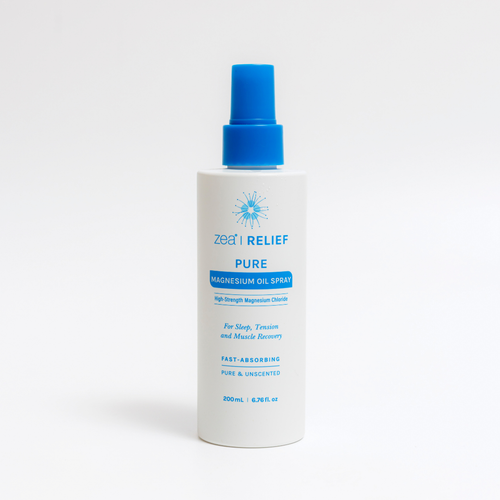
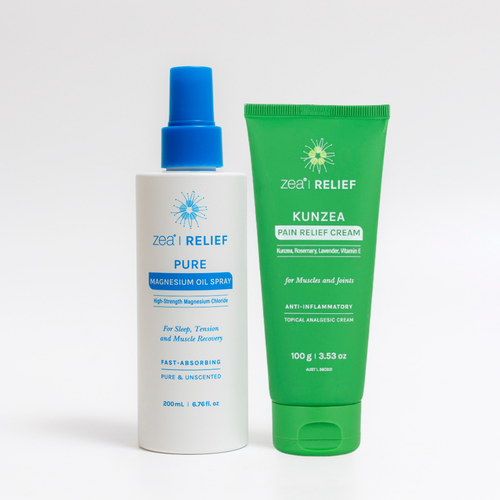
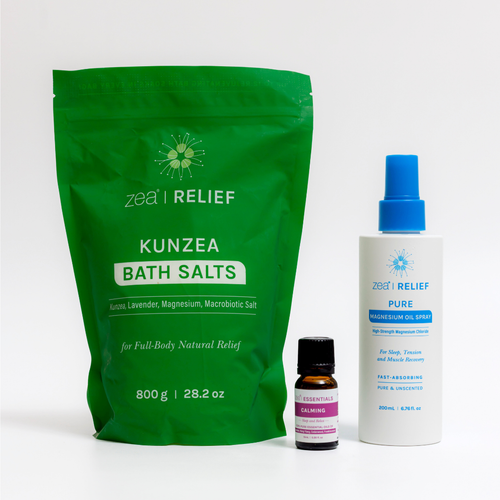
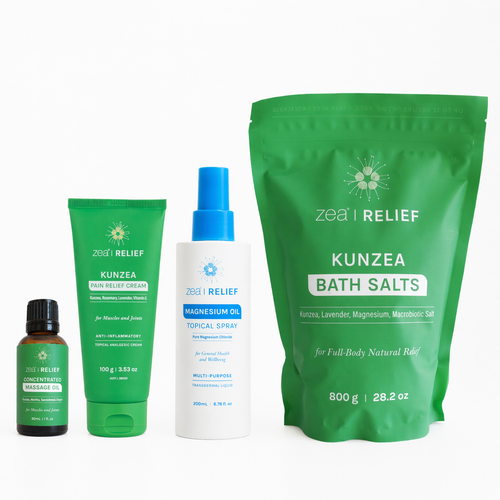
At Zea, our Magnesium Oil Topical Spray uses magnesium chloride, one of the most water-soluble, and topically well-suited, forms of magnesium available, dissolved simply in water, with no unnecessary additives. It's a straightforward option for anyone wanting to build a bit of magnesium into their daily or evening routine without the digestive considerations that come with tablets. Many of our customers use it on tired legs and feet before bed, or apply it to cramping muscles during the day as part of their everyday self-care.
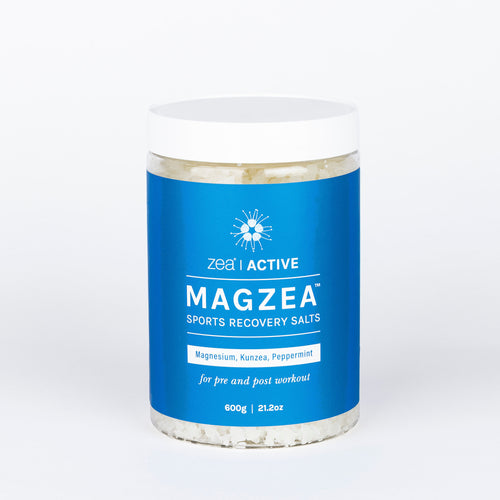
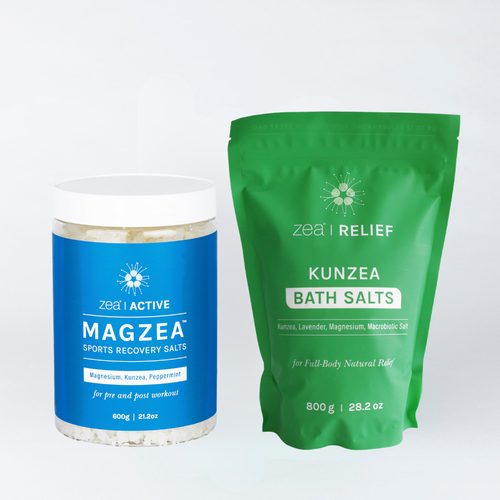
If you're after something with a bit more sensory experience for pre- or post-workout recovery, our MAGZEA™ Muscle Recovery Spray combines Magnesium Chloride with Kunzea and Peppermint for a cooling, revitalising feel on tired muscles. It's a popular pick for people who want their recovery routine to feel like a moment of relief, not just another task on the list.

The Bottom Line
At the end of the day, there's no single "best" way to get your Magnesium, just the way that suits you best. Tablets are the more researched option if you're addressing a genuine deficiency, especially if you choose a well-absorbed form like glycinate or citrate. Sprays are a gentle, digestion-friendly alternative that many people love folding into a bedtime routine or post-workout wind-down.
You don't have to choose forever, either. Plenty of people mix it up, a tablet for daily support, a spray for the ritual and the relief. Start small, see how your body responds, and build from there.
References
- Healthline. (2026). Types of magnesium and their benefits. https://www.healthline.com/nutrition/magnesium-types
- Mayo Clinic Press. (2025, June 13). Magnesium for sleep: What you need to know about its benefits. https://mcpress.mayoclinic.org/living-well/magnesium-for-sleep-what-you-need-to-know-about-its-benefits/
- Mito Health. (2025, December 16). Magnesium glycinate vs citrate: Key differences. https://mitohealth.com/blog/magnesium-glycinate-vs-citrate
- Nutrient Metrics. (2026, April 26). Magnesium forms and bioavailability: Oxide, citrate, glycinate, malate. https://nutrient-metrics.com/en/micronutrients/magnesium-forms-bioavailability/
- Rupa Health. (2024, December 23). Magnesium spray: How it works, benefits, and best choices. https://www.rupahealth.com/post/magnesium-spray-how-it-works-and-the-benefits